
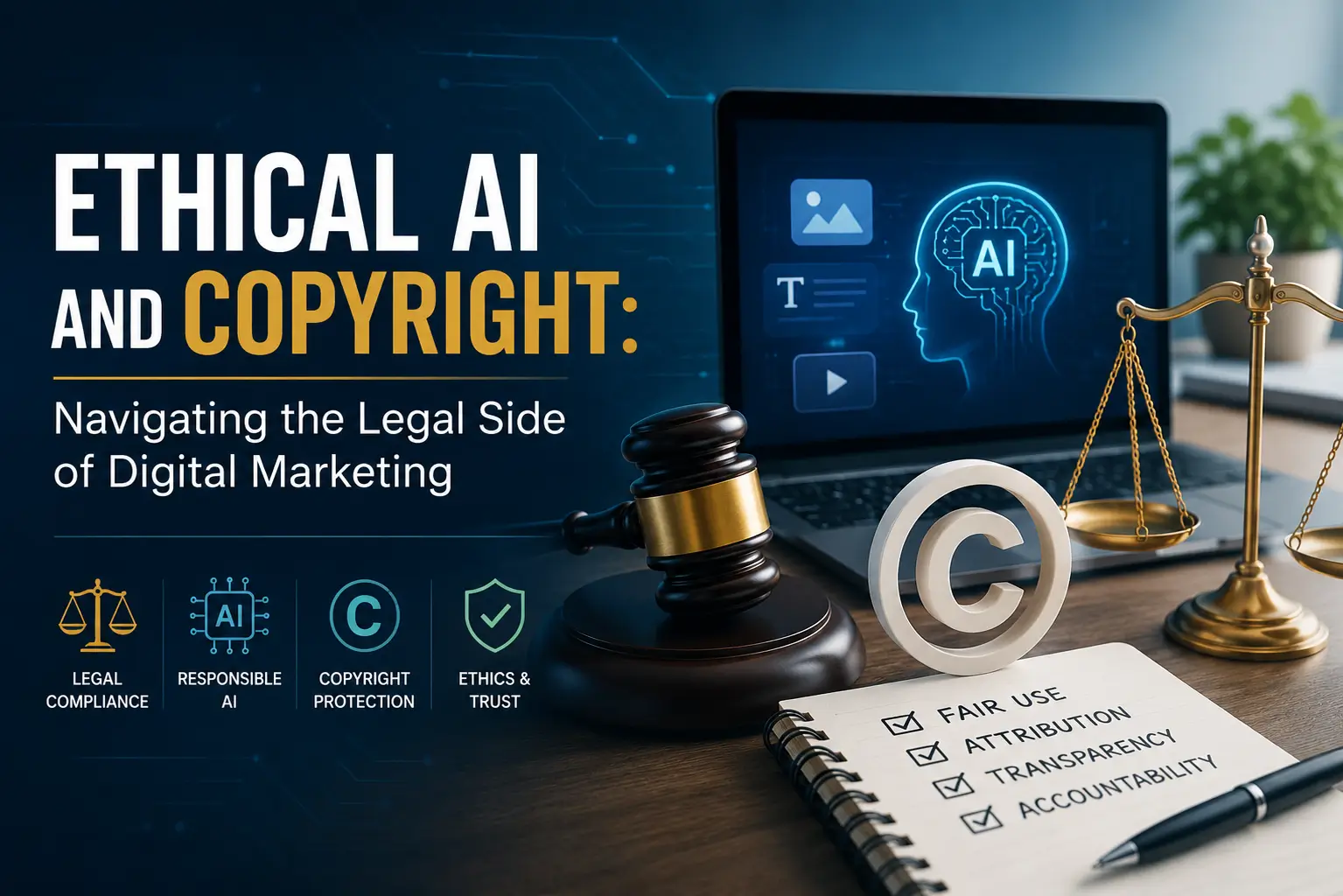
Artificial Intelligence (AI) is rapidly transforming the digital marketing industry. From automated content creation to predictive analytics and personalised campaigns, AI tools are helping businesses improve efficiency and reach customers more effectively. However, along with these benefits come serious concerns about copyright laws, ethical practices, and data privacy.
For students and aspiring marketers, understanding the legal side of AI is no longer optional. Companies today are actively looking for professionals who not only know how to use AI tools but also understand how to use them responsibly. This is why learning ethical AI practices has become an essential part of modern marketing education.

Turn Your Passion into a Digital Career with AI Learning!
Get hands-on training in AI-based marketing and build practical skills that help you succeed in today’s competitive digital landscape.
Why Ethical AI Matters in Digital Marketing?
AI-powered tools can generate blogs, social media captions, images, videos, and ad copies within seconds. While this increases productivity, marketers must ensure that the generated content does not violate copyright rules or misuse customer data.
Ethical AI in digital marketing mainly focuses on:
- Transparency in content creation
- Respecting copyright ownership
- Protecting customer data
- Avoiding misleading or false information
- Using AI-generated content responsibly
Brands that ignore these aspects can face legal penalties, reputation damage, and loss of customer trust.
Understanding Copyright in AI-Generated Content
One of the biggest debates in the marketing industry is whether AI-generated content can be fully owned or copyrighted. Many AI tools are trained on large datasets collected from the internet, which may include copyrighted material.
Common Copyright Risks in AI Marketing
| Risk Area | Example | Possible Issue |
| AI-written blogs | Copying sentence structures from existing articles | Plagiarism claims |
| AI-generated images | Similarity to original artworks | Copyright infringement |
| AI voice generation | Using celebrity-like voices | Legal disputes |
| Automated ads | Misleading claims generated by AI | Consumer complaints |
Because of these risks, marketers should always review AI-generated content before publishing it.
The Growing Importance of Data Privacy
AI systems often rely on customer data to provide personalised marketing recommendations. However, improper handling of user information can create major privacy concerns.
Key Data Privacy Principles
- Always collect customer data with permission
- Avoid sharing personal information with unauthorised platforms
- Use secure AI tools with trusted privacy policies
- Follow global regulations like GDPR and local compliance rules
- Inform users when AI-based personalisation is being used
Modern consumers are becoming more aware of how their data is used. Ethical marketers must therefore prioritise transparency and trust.
How Businesses Can Use AI Responsibly?
Responsible AI usage is not about avoiding AI completely. Instead, it is about combining automation with human judgment.
Best Practices for Ethical AI Usage
| Recommended Practice | Benefit |
| Human review before publishing | Reduces legal and factual errors |
| Proper content citations | Avoids plagiarism issues |
| AI policy for marketing teams | Creates clear ethical standards |
| Original creativity with AI assistance | Builds a unique brand identity |
| Regular compliance checks | Prevents legal complications |
Businesses that follow these practices can safely benefit from AI without harming their reputation.
Why Future Marketers Must Learn Ethical AI Skills?
The marketing industry is evolving rapidly. Companies now expect professionals to understand both creative marketing and responsible AI implementation. This is where practical education becomes important.
Students who enrol in advanced digital marketing training programmes gain hands-on experience with modern AI tools while learning about ethical practices, copyright compliance, and privacy regulations. Training institutes are now including AI ethics as a core part of their curriculum because businesses prefer professionals who can work safely in AI-driven environments.
A marketer who understands ethical AI becomes more valuable because they can help brands grow without risking legal or reputational problems.
Areas Where Ethical AI Knowledge Helps Marketers
Content Marketing
- Writing plagiarism-free blogs
- Creating original social media campaigns
- Verifying AI-generated information
SEO & Website Optimisation
- Avoiding spammy AI content
- Maintaining search engine compliance
- Building authentic user-focused content
Paid Advertising
- Preventing misleading ad claims
- Using customer data responsibly
- Creating transparent AI-driven campaigns
Branding & Reputation Management
- Protecting brand credibility
- Avoiding controversial AI outputs
- Building long-term customer trust
Challenges Marketers May Face with AI
Even though AI tools are powerful, they still have limitations. Overdependence on AI can create problems if marketers do not apply human judgment.
Major Challenges
- AI may generate incorrect information
- Content can unintentionally resemble existing material
- Some AI tools may use unclear data sources
- Privacy regulations differ across countries
- AI-generated visuals may create ownership confusion
Because of these challenges, marketers should use AI as a support tool rather than a complete replacement for creativity and strategy.
Ready to Boost Your Career with AI Skills?
Learn in-demand AI and digital marketing techniques designed to enhance your career growth and open new opportunities.
The Future of Ethical AI in Marketing
The future of digital marketing will heavily depend on responsible AI usage. Governments and technology companies are already working on stricter AI regulations to ensure transparency and fairness.
Future Trends to Watch
| Trend | Expected Impact |
| AI content disclosure rules | More transparency for users |
| Stronger copyright monitoring | Better protection for creators |
| Ethical AI certifications | Higher demand for trained professionals |
| Privacy-focused marketing | Increased customer trust |
| Human-AI collaboration | Smarter and safer campaigns |
Marketers who adapt early to these trends will have stronger career opportunities in the future.
Final Thoughts
AI is undoubtedly changing the future of digital marketing, but ethical responsibility must grow alongside technological advancement. Businesses today need marketers who can balance innovation with legal awareness, ensuring that content remains original, transparent, and compliant with copyright and privacy standards.
For students planning to build a successful marketing career, learning ethical AI practices is becoming just as important as learning SEO, social media, or paid advertising. A strong educational foundation can help future professionals confidently handle AI-powered tools while maintaining brand trust and legal safety.
If you want to build practical skills in ethical AI, content marketing, SEO, and automation tools, joining a professional Digital Marketing Training Institute in Ahmedabad can help you stay ahead in the modern marketing industry.
